Emergency Roof Tarping
A properly secured tarp over the damaged area to stop water coming in until the permanent repair can be made.
High wind lifts and tears shingles. Hail bruises them and knocks the granules off. Falling limbs do the rest. We inspect the roof, show you what the storm did and repair it.
Some of it is obvious: shingles in the yard, a limb on the roof, water coming in. Much of it is not. Wind can break the seal strip that holds shingles down without tearing them off, so they lift in the next storm. Hail leaves soft dark bruises where the granules are gone, and those spots wear through early.
A roof can look fine from the driveway and still have damage that shortens its life. An inspection after a serious storm is the only way to know.
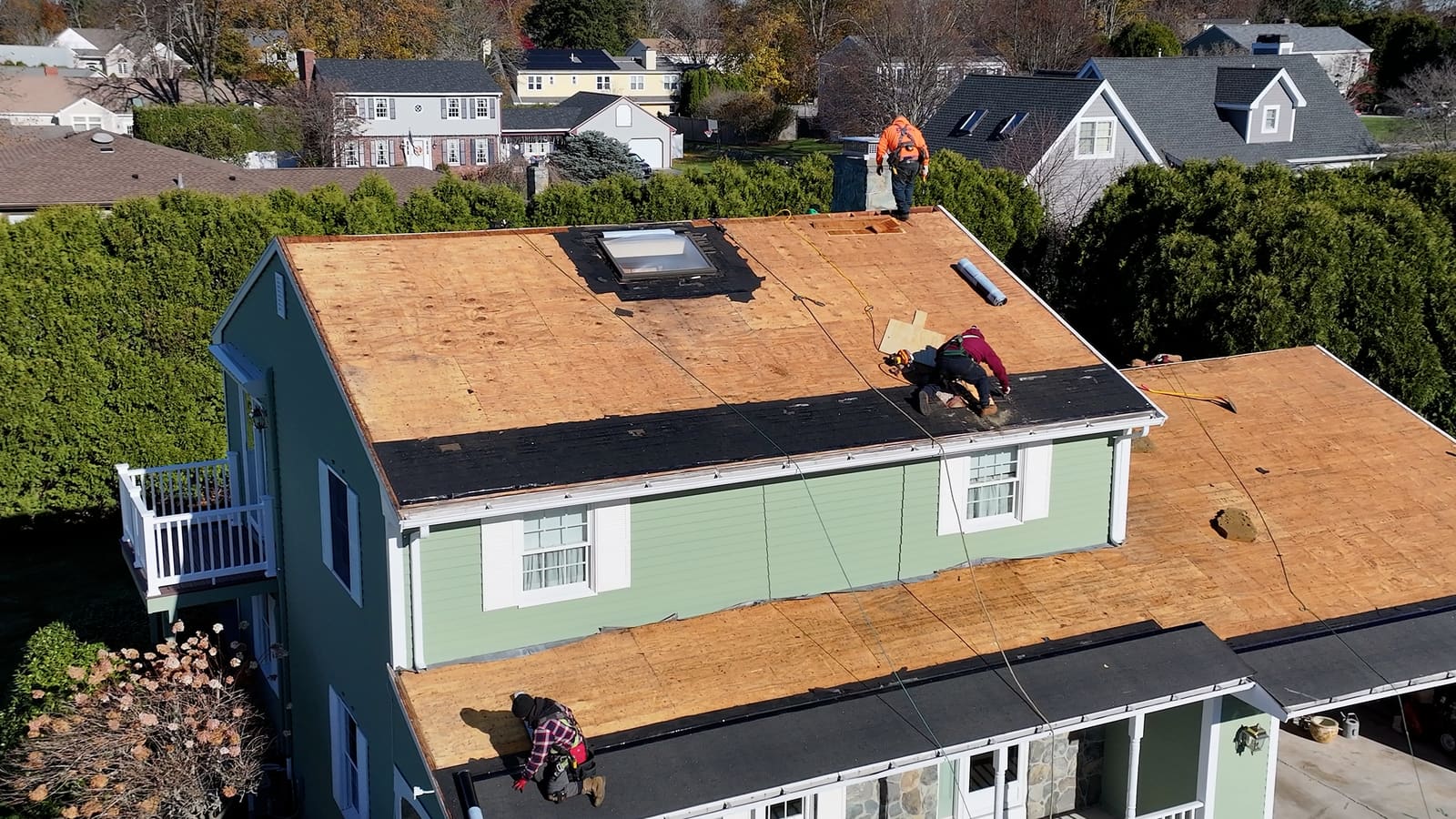
If the roof is open, we tarp it first to stop the water. Then we inspect the whole roof, take photos of every damaged area and give you a written description of what we found and what it will take to fix.
Repairs range from replacing a few shingles to replacing a full slope or the whole roof, depending on how widespread the damage is.
We are roofers. We do not handle insurance claims, and we do not negotiate with insurers. Your policy and your insurance company decide what is covered, and your deductible is set by your policy. What we can give you is clear photos and a written scope of the damage, which you are free to share with your insurer.
Three staffed offices cover Delaware County and Chester County. Pick the one closest to your roof.
County pages: Delaware County roofing and Chester County roofing.
Look for missing or creased shingles, pieces of shingle in the yard, dented vents or gutters, and granules collecting at the downspouts. Many signs cannot be seen from the ground, so have the roof inspected after a severe storm.
Stay off the roof. Take photos from the ground and inside the house, move belongings away from any leak, and call us. If water is coming in, ask about emergency tarping.
Yes. Wind can break the adhesive seal under the shingles so they lift and flap. They may lie back down afterward and look normal, but they are no longer sealed against the next storm.
We do not handle or negotiate insurance claims. We document the damage with photos and a written scope that you can give to your insurer. Coverage is decided by your policy and your insurance company.
It depends on how much of the roof is damaged and how old it is. Damage limited to one area is usually repaired. Widespread damage on an older roof often makes replacement the better value. We will give you both options.
Yes. We can install a tarp to keep water out until the permanent repair is made.
A properly secured tarp over the damaged area to stop water coming in until the permanent repair can be made.
Leaks, missing shingles, failed flashing and storm damage fixed properly, so the repair lasts as long as the roof around it.
A full tear-off and a new roof system, installed by a crew led by an Amish craftsman and priced with a written estimate.
Tell us what is going on and we will come out, look at it and give you a written estimate. No pressure.