
Roof Leak Detection
We find where the water actually gets in, which is rarely where the stain shows, and fix it at the source.
A stain on the ceiling is the last place a leak shows up. We trace the water back to where it gets in, repair that spot properly and tell you plainly what shape the rest of the roof is in.
Most roof problems start at a small number of places: missing or lifted shingles, worn pipe boots, flashing that has pulled away from a wall or chimney, exposed nail heads, and valleys where water concentrates. We repair all of these on asphalt shingle roofs, and we repair seams, flashing and punctures on flat roofs.
A proper repair replaces the damaged material and ties the new work into the surrounding roof so water sheds over it. Sealant alone is a patch, and patches fail.
If the roof has years of life left and the damage is limited to one area, repair it. If the shingles are brittle, the leaks keep moving or the same repair has been done before, the money is usually better spent on a new roof.
We will give you both numbers when the choice is close, and we will tell you which one we would pick for our own house.
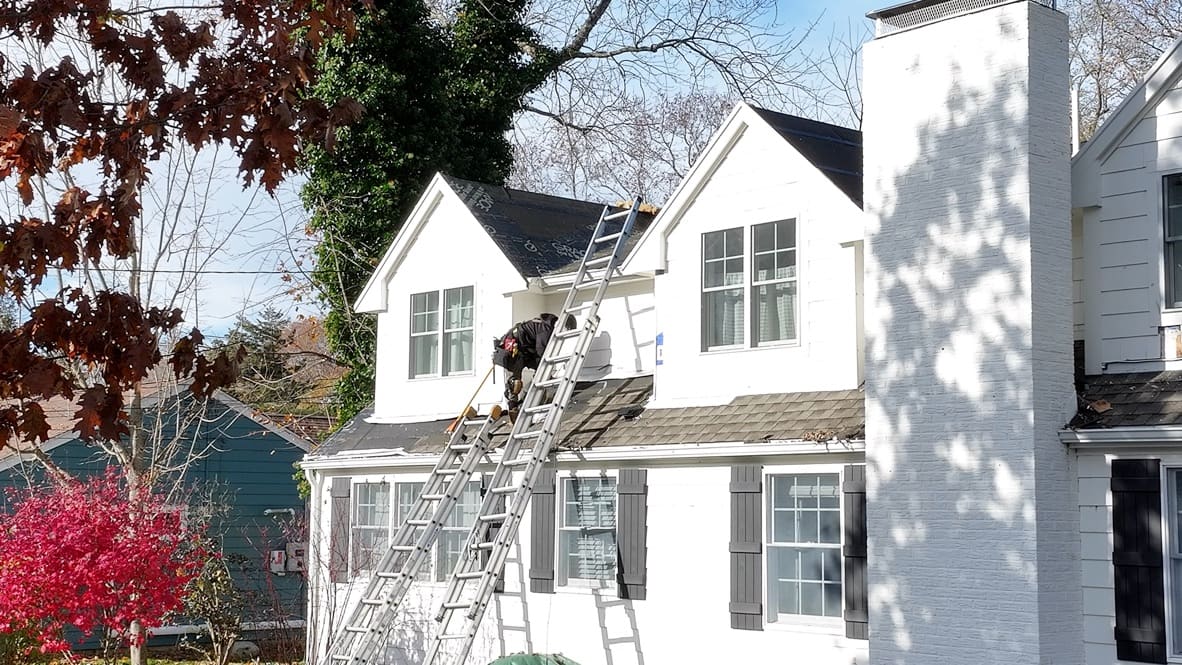
Catch the water, move what you can out of the way and take a photo of where it is coming in. If water is pooling in a ceiling, a small hole in the lowest point of the bulge lets it drain in a controlled way. Then call us. If the roof is open to the weather, ask about emergency tarping to keep the rain out until the repair can be made.
Three staffed offices cover Delaware County and Chester County. Pick the one closest to your roof.
County pages: Delaware County roofing and Chester County roofing.
Often, yes. When the damage is limited to one area and the surrounding shingles are still flexible and well sealed, a repair is the right call. We inspect the whole roof and tell you honestly which one you need.
Most leaks start at flashing, pipe boots, valleys and other transitions, not in the open field of shingles. Water can also travel along the deck before it shows inside, so the stain is rarely directly under the leak.
We match the shingle style and color as closely as possible. Shingles fade with age, so new ones can look slightly different at first. We will tell you ahead of time how close the match is likely to be.
Call the office nearest you and tell us what is happening. Active leaks are scheduled ahead of routine work, and we can tarp a roof to stop water coming in while the repair is arranged.
Yes. We repair seams, flashing, punctures and ponding areas on flat and low-slope roofs, including EPDM rubber, TPO and modified bitumen.
No. We look at the roof, explain what we found and give you a written estimate before any work begins.
We find where the water actually gets in, which is rarely where the stain shows, and fix it at the source.
Wind and hail damage inspected, documented with photos and repaired. Emergency tarping when the roof is open to the weather.
A full tear-off and a new roof system, installed by a crew led by an Amish craftsman and priced with a written estimate.
Tell us what is going on and we will come out, look at it and give you a written estimate. No pressure.